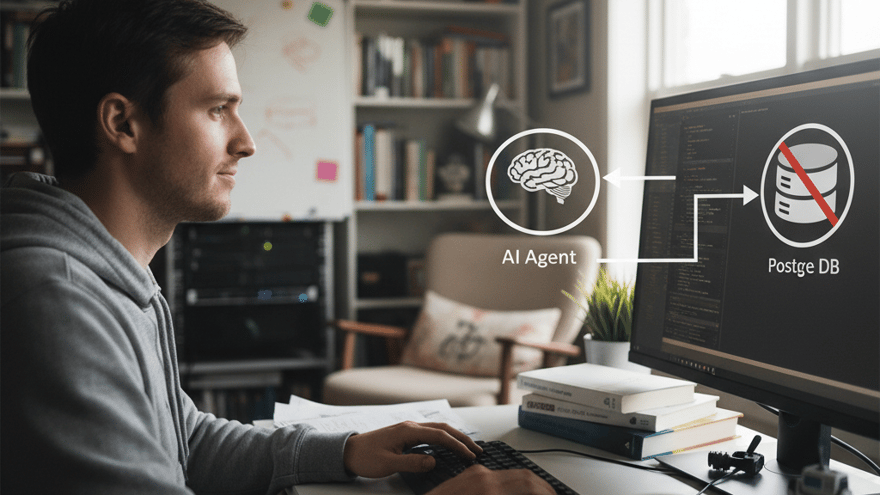
OpenAI mata Canvas (seu agente IA quebra, refactor urgente)
OpenAI derruba Canvas (feature flagship). Agente IA que usa Canvas é obsoleto. Precisa refactor. Downtime mata adoption.

Equipe OpenClaw · Time de Engenharia & Produto
A Equipe OpenClaw é formada por engenheiros, designers e especialistas em IA dedicados a construir a melhor plataforma de agentes conversacionais para negócios brasileiros. Combinamos expertise…
OpenAI mata Canvas (seu agente IA quebra, refactor urgente)
Você tem SaaS.
Seu SaaS: agente IA (escrita, coding assistance, document generation).
Você construiu agente em cima de Canvas (OpenAI feature):
"Canvas é perfeito (built-in para writing/coding tasks).
Canvas é simple (não preciso custom UI, Canvas handle tudo).
Canvas é production-ready (usado por milhões de people).
Canvas vai estar aí forever (it's core feature)."
Você deployou agente (baseado em Canvas):
Customer workflow:
- Customer pede: "Write marketing copy for my product"
- Agente (via Canvas): Abre Canvas (side-by-side editor)
- Agente: Escreve marketing copy no Canvas
- Customer: Vê copy em Canvas (pode edit inline)
- Customer: Loves it (Canvas UX é clean, polished)
Tudo funciona.
Customers amam Canvas (feature é ótima).
Agente adoption é strong (customers using daily).
ROI é positivo (agente trazendo value).
Recent news (May 2026):
"OpenAI deprecates Canvas (effective immediately).
"Canvas will be removed from GPT-5.5 Instant (and future models).
"Writing and coding tasks will run directly in chat (no Canvas).
"Deadline: August 2026 (Canvas fully sunset)."
You realize:
"Oh no.
Canvas vai disappear (in 3 months).
Meu agente depends on Canvas (100% built on it).
Sem Canvas, agente quebra.
Customers vão sofrer (UX vai degradar).
Preciso refactor agente (immediately).
Refactor = time (3-4 weeks dev).
Refactor = money (R$ 20-30k em eng).
Refactor = downtime (agente indisponível durante refactor).
Downtime = customer churn (customers switch to competitor).
This is a CRISIS."
O problema (OpenAI mata features)
What OpenAI announced (May 2026)
OPENAI ANNOUNCEMENTS:
-
Canvas is being deprecated
- Canvas: Built-in editor for writing/coding tasks
- Current status: Available in GPT-4.5, o3, GPT-5.5
- New status: Being removed from GPT-5.5 Instant (and future models)
- Deadline: August 2026 (full sunset)
- Alternative: Tasks run directly in chat (no separate editor)
-
Why OpenAI is killing Canvas
- Canvas adds complexity (another UI to maintain)
- Users prefer direct chat (simpler)
- AI can handle longer context (chat can do everything Canvas does)
- Consolidation (fewer features = simpler product)
-
Impact on existing agentes/applications
- Canvas-dependent apps: Will break (August 2026)
- Apps using Canvas API: Will lose feature
- User experience: Will degrade (no side-by-side editor)
- Workarounds: Need custom UI rebuild
-
Model deprecations (also announced)
- o3 model: Retiring August 2026
- GPT-4.5: Retiring August 2026
- Implication: Apps using these models also need migration
WHAT THIS MEANS:
Before (Current):
- Canvas available (apps can use it)
- o3, GPT-4.5 available (apps can use them)
- Agentes using Canvas: Work fine (feature is stable)
After (August 2026):
- Canvas deprecated (feature gone)
- o3, GPT-4.5 deprecated (models gone)
- Agentes using Canvas: Break (feature not available)
- Apps using o3/GPT-4.5: Break (models not available)
WHY THIS MATTERS FOR YOUR AGENTE:
If your agente uses Canvas:
- August 2026: Canvas stops working (API returns error)
- Your agente: Breaks (can't render Canvas)
- Customers: See errors ("Canvas not available")
- Customers: Frustrated (agente doesn't work)
- Your SaaS: Loses customers (they switch to competitor)
If your agente uses o3 or GPT-4.5:
- August 2026: Models stop working (API returns error)
- Your agente: Breaks (can't call deprecated model)
- Customers: See errors ("Model not available")
- Customers: Frustrated (agente doesn't respond)
- Your SaaS: Loses customers (they switch to competitor)
Why vendor lock-in is dangerous (the real problem)
THE LOCK-IN PROBLEM:
When you build agente on top of vendor feature (like Canvas):
-
Short-term: Easy and fast
- Canvas is built-in (no custom UI needed)
- Canvas is polished (OpenAI invested heavily)
- Canvas is free (no additional cost)
- Time to market: Fast (weeks, not months)
-
Medium-term: Problem emerges
- Vendor changes feature (updates Canvas UX)
- Your agente updates automatically (good or bad)
- Sometimes: Updates break your agente (bad)
- You have no control (vendor decides)
-
Long-term: Vendor kills feature
- Canvas is deprecated (vendor wants to simplify)
- Your agente depends on Canvas (100%)
- Your agente breaks (no alternative available)
- You must refactor (custom UI, new integration, etc)
- Cost: Months of work + downtime + customer churn
THE COST OF LOCK-IN:
Scenario 1: Canvas-dependent agente
Initial build (2024):
- Build agente on Canvas: 3 weeks
- Cost: R$ 15k (eng time)
- Time to market: 3 weeks
- Feeling: "We shipped fast!"
Feature maturation (2024-2025):
- Customers use agente + Canvas: Works great
- Adoption growing: 1k customers → 5k customers
- Revenue growing: R$ 100k/month → R$ 500k/month
- Feeling: "Canvas is core to our value!"
Feature deprecation (May 2026):
- OpenAI announces: Canvas deprecated (August 2026)
- Your team realizes: Agente is canvas-dependent
- Your team panics: "We have 3 months to refactor"
Emergency refactor (May-August 2026):
- You must rebuild Canvas functionality: 4-6 weeks
- Cost: R$ 40-60k (emergency eng time, overtime)
- Timeline: 3 months (August deadline)
- Quality: Rushed (less polished than Canvas)
- Customer experience: Degrades (new UI is different)
Downtime + churn (August 2026):
- Agente downtime: 2-3 days during migration
- Customer complaints: "Agente not working"
- Customer churn: 10-20% of users switch to competitor
- Revenue impact: Lost R$ 50-100k (customer lifetime value × churn rate)
Total cost of Canvas lock-in:
- Emergency refactor: R$ 40-60k
- Lost revenue (churn): R$ 50-100k
- Lost engineering (opportunity cost): R$ 20k
- Reputation damage: Priceless
- Total: R$ 110-180k + reputation damage
Scenario 2: Agente built on custom, vendor-agnostic approach
Initial build (2024):
- Build custom Canvas-like UI: 6 weeks
- Cost: R$ 30k (eng time)
- Time to market: 6 weeks (slower, but better long-term)
- Feeling: "We own our destiny"
Feature maturation (2024-2025):
- Customers use agente + custom UI: Works great
- Adoption growing: 1k customers → 5k customers
- Revenue growing: R$ 100k/month → R$ 500k/month
- Feeling: "Our UI is core to our value!"
Feature deprecation (May 2026):
- OpenAI announces: Canvas deprecated
- Your team realizes: Agente uses custom UI (not Canvas)
- Your team reaction: "This doesn't affect us"
No emergency (May-August 2026):
- No refactor needed (you already have custom UI)
- No downtime (agente continues working)
- No churn (customers unaffected)
- Your SaaS: Gains competitive advantage (competitors are in crisis)
Total cost of vendor-agnostic approach:
- Initial build (custom UI): R$ 30k
- Ongoing maintenance: R$ 5k/month
- But: Protected against vendor changes (future-proof)
- Long-term value: Priceless (independence)
COMPARISON:
Canvas lock-in:
- Initial cost: R$ 15k (fast)
- Crisis cost: R$ 110-180k (slow recovery)
- Total cost: R$ 125-195k
- Plus: Reputation damage, customer churn
Vendor-agnostic:
- Initial cost: R$ 30k (slower, but better)
- Crisis cost: R$ 0 (no crisis)
- Total cost: R$ 30k + R$ 5k/month maintenance
- Plus: Independence, competitive advantage
THE LESSON:
Building on vendor features (Canvas, o3, etc):
- Fast initially (weeks, not months)
- Cheap initially (R$ 15k, not R$ 30k)
- But expensive later (R$ 110-180k crisis cost)
- Risky (vendor can change anything, anytime)
Building vendor-agnostic:
- Slower initially (6 weeks, not 3)
- More expensive initially (R$ 30k, not R$ 15k)
- But cheap later (no crisis cost)
- Safer (your control, your feature)
WHY VENDORS KILL FEATURES:
-
Product simplification
- Canvas is complex to maintain
- Removing it = simpler codebase
- Result: Lower engineering cost for vendor
-
Strategic pivot
- OpenAI pivots to "chat-first" (no separate editors)
- Canvas doesn't fit new vision
- Result: Feature gets removed
-
Market consolidation
- Fewer features = easier to sell
- Canvas users: Small % of user base
- Result: Canvas gets killed (less valuable than cutting costs)
-
Vendor lock-in exploitation
- OpenAI builds Canvas (free, good)
- Apps build on top of Canvas (lock-in grows)
- OpenAI kills Canvas (apps forced to upgrade to paid plans)
- Result: Higher switching costs = higher vendor lock-in
VENDOR LOCK-IN IS ENDEMIC:
OpenAI Canvas deprecation is just latest example:
- Google: Kills APIs constantly (e.g., Google+ API)
- Amazon: Kills AWS services (e.g., EC2-Classic)
- Microsoft: Kills Windows features (e.g., Internet Explorer)
- Twitter: Kills API endpoints (forced developers to upgrade)
Pattern: Build free feature → Developers adopt → Feature deprecated → Developers forced to pay or refactor
Your agente: Vulnerable to same pattern
A solução (avoid vendor lock-in)
Strategy 1: Build custom, don't depend on vendor features
APPROACH:
-
Avoid Canvas (build custom UI instead)
- Instead of: Using Canvas editor (vendor feature)
- Do this: Build custom document editor (your control)
- Tool options: Monaco Editor, CodeMirror, Slate.js
- Cost: R$ 20-30k (initial build)
- Benefit: Your control (vendor can't kill it)
-
Avoid o3, GPT-4.5 (use GPT-5.5 Instant instead)
- Instead of: Using deprecated models
- Do this: Use latest stable model (GPT-5.5 Instant)
- But also: Support Mistral, Llama (backup options)
- Benefit: Model can change, agente still works (fallback models)
-
Build abstraction layer (decouple from vendor) python
BAD: Direct Canvas dependency
response = openai.Canvas.create(prompt="Write marketing copy") return response.canvas_url # ← Breaks if Canvas deprecated
GOOD: Abstraction layer
class DocumentEditor: def render(self, content): # Could use Canvas, or custom UI, or anything # Vendor change doesn't affect this interface pass
editor = DocumentEditor() response = llm.generate(prompt="Write marketing copy") return editor.render(response.content) # ← Vendor-agnostic
-
Support multiple LLM vendors
- Don't depend on OpenAI exclusively
- Support: OpenAI, Anthropic (Claude), Mistral, Groq
- Benefit: If OpenAI deprecates feature, switch to Anthropic
- Cost: R$ 10-15k (multi-vendor integration)
- Payoff: Independence (you choose, not vendor)
COST COMPARISON:
Approach 1: Canvas dependency
- Build fast: 3 weeks, R$ 15k
- Crisis later: R$ 110-180k
- Total: R$ 125-195k (includes crisis cost)
Approach 2: Custom + multi-vendor
- Build slower: 6-8 weeks, R$ 40-50k
- No crisis: R$ 0
- Total: R$ 40-50k (no crisis cost)
- Savings vs Approach 1: R$ 75-145k (plus reputation)
RECOMMENDATION:
Always choose Approach 2 (custom + multi-vendor):
- Initial cost is higher (R$ 40-50k vs R$ 15k)
- But crisis cost is zero (no emergencies)
- Long-term savings are huge (R$ 75-145k)
- Independence is priceless (you control destiny)
Strategy 2: If you must use vendor features, plan for deprecation
IF YOU'RE ALREADY LOCKED-IN (Canvas, o3, etc):
-
Create migration plan (NOW, not later)
- Document all Canvas usage (where does it appear?)
- Document all o3/GPT-4.5 usage (where are these models called?)
- Map replacement (what custom UI replaces Canvas?)
- Timeline: 3 months (before August deadline)
-
Start refactor immediately (don't wait)
- August deadline: 3 months away
- Refactor timeline: 4-6 weeks (leaves buffer)
- Start date: June 1st (immediately)
- Finish date: July 15th (before deadline)
-
Minimize downtime (plan carefully)
- Run old + new in parallel (both live)
- Gradual migration (10% customers on new version)
- Monitor: Are customers happy with new version?
- If yes: 100% migration
- If no: Fix before full migration
- Timeline: 2-3 weeks (safe, not rushed)
-
Communicate with customers (transparency)
- Tell customers: "We're improving agente" (not "Canvas is dying")
- Show new UI: "Cleaner, faster, more features"
- Offer: Early access to test new version
- Benefit: Customers feel involved (not victimized)
EXAMPLE MIGRATION PLAN:
June 2026 (Week 1-2):
- Build custom UI (Canvas replacement)
- Integrate new UI with agente
- Test thoroughly (internal QA)
- Cost: R$ 20k (eng time)
June 2026 (Week 3):
- Launch beta version (custom UI, no Canvas)
- Invite 10% of customers (early adopters)
- Monitor: Feedback, errors, performance
- Goal: Validate new UI works
July 2026 (Week 1-2):
- Fix bugs from beta feedback
- Improve new UI based on feedback
- Prepare 100% migration
- Cost: R$ 10k (eng time, fixes)
July 2026 (Week 3-4):
- Migrate remaining 90% of customers
- Monitor closely (watch for errors)
- Support team on standby (answer questions)
- Communicate: "Agente improved! Faster, cleaner, better"
August 2026:
- Full migration complete (Canvas deprecated)
- Customers happy with new UI
- Agente still works (no downtime)
- Crisis averted ✓
TOTAL COST (Smart migration):
- Custom UI: R$ 20k
- Bug fixes: R$ 10k
- Support overhead: R$ 5k
- Total: R$ 35k (vs R$ 110-180k crisis cost)
- Savings: R$ 75-145k
Conclusão: OpenAI mata Canvas (refactor agora, não depois)
**O que você precisa saber:
-
OpenAI deprecated Canvas (May 2026, deadline August 2026)
- Canvas: Side-by-side editor for writing/coding
- Status: Being removed from GPT-5.5 Instant and future models
- Deadline: August 2026 (3 months away)
- Also deprecated: o3 and GPT-4.5 models (same deadline)
-
The lock-in problem: Building on vendor features is risky
- Short-term: Fast and cheap (Canvas is free, no custom work)
- Long-term: Expensive (when Canvas is killed, you must refactor)
- Crisis cost: R$ 110-180k (emergency refactor + customer churn)
- Alternative cost: R$ 40-50k (build custom upfront, no crisis)
-
If your agente uses Canvas, you're in trouble (3 months to fix)
- Agente breaks August 2026 (Canvas API stops working)
- Customers see errors ("Canvas not available")
- Customers churn (10-20% switch to competitor)
- You must refactor (4-6 weeks of work, R$ 40-60k)
-
How to protect yourself (two strategies)
- Strategy A: Build custom UI (not vendor features)
- Strategy B: If locked-in, refactor now (before crisis)
-
The numbers
- Canvas lock-in crisis: R$ 125-195k total cost + reputation damage
- Custom UI from start: R$ 40-50k total cost + independence
- Refactoring now: R$ 35k cost + no downtime + customers happy
- Refactoring later: R$ 110-180k cost + downtime + customer churn
Na OpenClaw, ajudamos agentes IA a:
- AUDIT agente architecture (are you locked-in to Canvas/o3?)
- PLAN migration (refactor timeline, parallel running)
- BUILD custom UI (Canvas replacement, your control)
- SUPPORT multi-vendor LLMs (OpenAI + Anthropic + Mistral fallback)
- EXECUTE safe migration (beta → full rollout, zero downtime)
Resultado: Seu agente IA é INDEPENDENT (não bloqueado em vendor features) + RESILIENT (pode lidar com deprecations) + SCALABLE (custom UI é seu, não de vendor) + PROFITABLE (economiza R$ 75-145k em crisis costs).
Seu agente IA usa Canvas (vai quebrar August 2026)?
Ou seu agente IA é vendor-agnostic (sobrevive qualquer deprecation)?
Publicado em 30 de maio de 2026