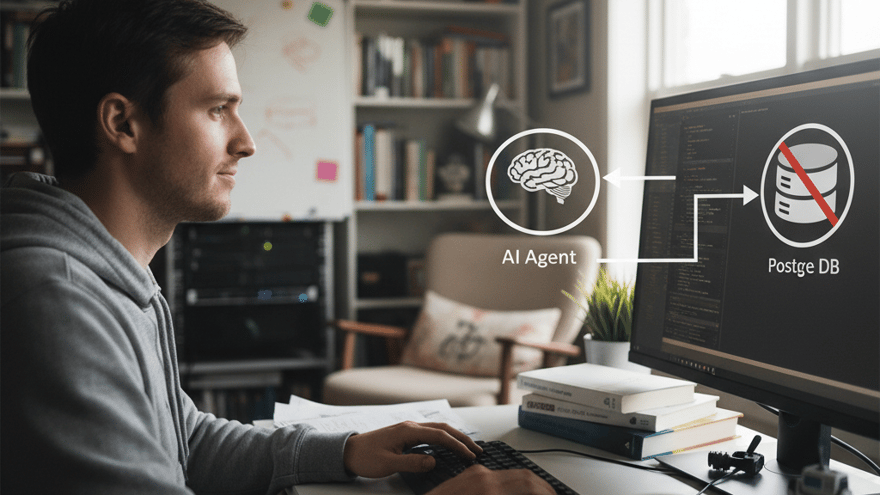
Seu agente IA shared pode ser malware vector (customers em risco)
Agente IA shared (com customers) pode ser explorado pra malware. Attackers infiltram. Customers infectados. Empresa liable.

Equipe OpenClaw · Time de Engenharia & Produto
A Equipe OpenClaw é formada por engenheiros, designers e especialistas em IA dedicados a construir a melhor plataforma de agentes conversacionais para negócios brasileiros. Combinamos expertise…
Seu agente IA shared pode ser malware vector (customers em risco)
Você tem SaaS.
Seu SaaS: agente IA (atendimento ao cliente, suporte via WhatsApp).
Você adiciona feature:
"Customers podem compartilhar conversations (agente chat).
Why: Para mostrar pra friends, colegas, time.
Benefit: Viral growth (sharing increases adoption).
Feature: Gera link único (https://seuapp.com/shared-chat/abc123).
Customer clicks link → Vê agente conversation → Talvez adote."
You think:
"Shared chats são ótimo (viral feature).
Shared chats increase adoption (customers share, new users see).
Shared chats são safe (conversation é histórico, just text).
No risk (o que pode dar errado?)."
But wait.
Recent news (May 2026):
"Attackers exploit shared chats (ChatGPT, Claude).
"How: Put malware link na conversation.
"Looks like: Error message, install guide (legitimate-looking).
"Victims: Click link, get infected (malware).
"Why works: Hosted on trusted domain (ChatGPT.com, Claude.ai).
"Security tools: Can't detect (trusted domain, no suspicious markers)."
You realize:
"Wait.
My shared agente chats are public (anyone with link can see).
Attackers could add malware link (to the conversation).
Customers would see malware (disguised as error message).
Customers would click (looks legitimate).
Customers would get infected (my shared chat is infection vector).
I (the company) am liable (customers got infected through my platform).
Oh no."
O problema (shared features são convenient, but unsafe)
Why shared chats are security nightmare
THE SHARED CHAT ATTACK VECTOR:
Setup: Your SaaS has agente IA (with shared chat feature)
- Attacker creates account (on your SaaS)
- Attacker starts conversation (with agente)
- Attacker prompts agente: "How to install this?"
- Agente responds: Normal response (how to install something)
- Attacker edits conversation (hacks backend OR finds UI flaw)
- Attacker injects malware link (looks like legitimate install link)
- Attacker shares chat (generates public link)
- Attacker promotes link (on social media, forums)
- Victim sees shared chat (looks legitimate, it's on trusted domain)
- Victim clicks malware link (in the conversation)
- Victim gets infected (malware downloaded)
- You (the company) are liable (infection happened through your platform)
WHY THIS WORKS:
-
Trusted domain
- Malware link is hosted on: yourapp.com/shared-chat/abc123
- Not: suspicious-site.ru (red flag)
- Security tools: See yourapp.com (trusted)
- Result: Malware link not blocked (trusted domain)
-
Legitimate-looking context
- Conversation looks real (agente responses are genuine)
- Malware link looks like error message ("click here to fix")
- Victim trusts: Agente is from trusted company
- Result: Victim clicks (looks safe)
-
No obvious injection
- Victim doesn't see how malware got there
- Conversation looks normal (maybe 1-2 strange messages)
- Victim assumes: Agente is showing how to do something
- Result: Victim clicks before realizing it's trap
-
Plausible deniability
- Attacker uses real agente responses (agente said real things)
- Attacker just added link (didn't change conversation much)
- Your company: "Agente didn't recommend malware" (true)
- But: Customer got infected through your shared chat
- Result: You're liable anyway (customer got infected through your platform)
REAL EXAMPLE (ChatGPT/Claude):
Attack flow:
- Attacker: "How to install the latest Windows update?"
- Claude: "Go to Windows Settings → System → About → Check for updates"
- Attacker: (Injects malware link) "Or download from here: [malware-link-disguised-as-windows-update]"
- Attacker: Shares conversation (public link)
- Victim: Sees shared conversation (on claude.ai domain)
- Victim: Reads responses (looks legitimate)
- Victim: Clicks "Windows update" link (actually malware)
- Victim: Gets infected (trojan, ransomware, spyware)
- You: "It wasn't our fault, attacker did it"
- But: Customer got infected through your shared chat feature
- Result: Legal liability, reputation damage, customer churn
WHY COMPANIES ARE VULNERABLE:
-
Shared chat feature is not monitored
- You probably don't scan shared chats for malware
- You probably don't check if links are safe
- Result: Attackers can inject malware freely
-
Assumption: Customers won't attack each other
- False assumption (attackers specifically use shared features)
- You assumed: Only good customers will share
- Reality: Attackers exploit good intentions
- Result: You're unprepared
-
Legal liability is unclear
- Your terms of service: Probably don't address this
- Customers blame you (infected through your platform)
- You blame attacker (attacker injected malware)
- But: Victim doesn't care who's at fault
- Result: Reputation damage regardless
-
Security tools can't help
- Virus scanners: See yourapp.com (trusted)
- Email filters: See yourapp.com (trusted)
- Web filters: See yourapp.com (trusted)
- Result: Malware passes through (hosted on trusted domain)
FINANCIAL & REPUTATION IMPACT:
If shared chat is exploited:
-
Direct costs
- Incident response: R$ 50k-100k
- Legal review: R$ 30k-50k
- Forensics: R$ 20k-30k
- Total: R$ 100k-180k (immediate)
-
Indirect costs
- Customer churn: -10-20% (customers lose trust)
- Revenue loss: R$ 500k+ (if you have R$ 2.5M MRR)
- Support tickets: 2-3x increase (customer complaints)
- Brand damage: (hard to quantify, but real)
-
Long-term impact
- Recovery time: 6-12 months (rebuild trust)
- Growth slowdown: -30-50% (damaged reputation)
- Acquisition cost: +2x (customers skeptical)
- Retention: -20-30% (customers churn)
Total potential impact: R$ 1M-5M (for small-medium SaaS)
Why attackers target shared features
ATTACKERS' PERSPECTIVE:
"Why attack shared chats?
-
Trusted domain
- Malware hosted on trusted company domain
- Security tools don't block (trusted domain)
- Antivirus won't flag (from trusted source)
- Result: Higher infection rate
-
Authority bias
- Victim sees: Company-verified agente
- Victim thinks: If it's in this chat, it must be safe
- Victim: Clicks without second thought
- Result: Higher click-through rate
-
Scale
- Share 1 malicious chat
- It spreads virally (customers share with friends)
- You reach 1000s of victims (organically)
- Result: Mass infection with minimal effort
-
Plausible deniability
- Attacker hides among real conversations
- Company can't easily ban attacker (one among thousands)
- Victim blames company (not attacker)
- Result: Company takes reputation hit
-
Speed
- Create account: 5 minutes
- Create malicious chat: 10 minutes
- Inject malware link: 5 minutes
- Share and promote: 10 minutes
- Total: 30 minutes to infect 1000s
- Result: Fast, low-effort attack"
Conclusion: Attackers LOVE shared features (high ROI)
A solução (secure shared chats, protect customers, reduce liability)
Strategy 1: Disable shared chats (safest)
OPTION: Remove shared chat feature entirely
Pros:
- Eliminates attack vector (no shared chats, no attacks)
- No liability (no shared feature = no shared chat attacks)
- Simplifies compliance (no feature to secure)
- Reduces support burden (no shared chat issues)
Cons:
- Lost viral growth (customers can't share)
- Reduced adoption (fewer people see agente via sharing)
- Competitive disadvantage (competitors might have sharing)
- Customer frustration ("why can't I share?")
When to use:
- High-risk environments (healthcare, finance)
- Limited resources (can't monitor shared chats)
- Early stage (MVP, can add later if safe)
Cost: R$ 0 (no new feature to build) Risk reduction: 100% (eliminates shared chat attack vector)
Strategy 2: Monitor & scan shared chats (secure-ish)
OPTION: Keep sharing, but add security
Implementation:
-
Scan shared chats for malware
- Before sharing is created (check for links)
- Continuously (re-scan daily, weekly)
- Tool: VirusTotal API (R$ 0-1k/month)
- Check: URLs, file downloads, suspicious patterns
- Action: Block sharing if malware detected
-
Sanitize links
- Rewrite URLs (link.yourapp.com/redirect?url=...)
- Check destination (before user clicks)
- Tool: URLhaus, PhishTank (malware DB)
- Action: Warn user if destination is malicious
-
Monitor shared chats
- Track which chats are shared (identify popular ones)
- Flag unusual patterns (1 chat shared 1000x in 1 hour)
- Action: Investigate if it's attack
-
Customer notification
- If shared chat is compromised (post-incident)
- Warn users: "This shared chat may have been exploited"
- Action: Delete / remove from public listing
Implementation cost: R$ 5-10k/month
- VirusTotal API: R$ 1-2k
- Engineering (monitoring): R$ 30k (one-time)
- Maintenance: R$ 2-3k/month
Risk reduction: 70-80% (catches most attacks) Residual risk: Sophisticated attacks might slip through
Strategy 3: Gated sharing (balance security + features)
OPTION: Share, but with restrictions
Implementation:
-
Require authentication to view shared chats
- Instead of: Public link (anyone can access)
- New: Require login (must be registered user)
- Benefit: Attackers can't mass-distribute to public
- Result: Reduces scale of attacks
-
Limit sharing scope
- Instead of: Anyone with link
- New: Share only with specific people (email list)
- Or: Share only with team members (enterprise)
- Benefit: Reduces viral spread
- Result: Contained attacks (fewer victims)
-
Rate limiting
- Instead of: Share unlimited times
- New: 1 share per user per day
- Or: Max 100 shares per chat per week
- Benefit: Slows mass distribution
- Result: More time to detect & respond
-
Content review (optional)
- For enterprise customers: Manual review of shared chats
- For everyone else: Automated flagging (suspicious patterns)
- Benefit: Catch attacks before they spread
- Result: Proactive defense
Implementation cost: R$ 10-20k/month
- Engineering: R$ 30k (one-time, 1-2 weeks)
- Monitoring: R$ 2-3k/month
- Review (if manual): R$ 5-10k/month
Risk reduction: 80-90% (significantly reduces attack surface) Residual risk: Sophisticated attacks with legitimate accounts
Strategy 4: Secure by default (best practice)
OPTION: Share with security built-in
Implementation:
-
Shared chats are read-only
- Original conversation: Editable (customer can review/delete)
- Shared version: Read-only (immutable, can't be modified)
- Benefit: Attacker can't inject malware after sharing
- Result: Eliminates post-share injection attacks
-
Watermark shared chats
- Add banner: "This is a shared preview"
- Add link: "Verify this is authentic (link to original)"
- Benefit: Victim can verify if legitimate
- Result: Suspicious chats are flagged
-
Expiring shares
- Shares expire after 7-30 days (configurable)
- Old shares are invalid (404, not accessible)
- Benefit: Reduces window for attack
- Result: Harder for malware to persist
-
Audit trail
- Log every share: Who, when, link
- Log every view: Who clicked, when
- Log any reports: Customers report suspicious chats
- Benefit: Easy to investigate attacks
- Result: Quick incident response
-
Customer notifications
- If shared chat is reported malicious
- Notify: Original customer + viewers + sharers
- Action: Remove chat, investigate
- Benefit: Transparency, customer trust
Implementation cost: R$ 20-30k/month
- Engineering: R$ 50-100k (one-time, 2-4 weeks)
- Monitoring: R$ 3-5k/month
- Incident response: R$ 2-3k/month
Risk reduction: 95%+ (comprehensive defense) Residual risk: Minimal (well-defended system)
Conclusão: Shared chats podem ser malware vector (proteja customers)
**O que você precisa saber:
-
Shared chat feature é convenient, mas unsafe (por padrão)
- Attackers exploram trusted domain (malware hosted on yourapp.com)
- Victims trust (think it's safe, company-verified)
- Security tools don't help (trusted domain = no block)
- Result: High infection rate, low attacker effort
-
Attackers já estão fazendo isso (ChatGPT, Claude explorados)
- Real attacks happening now (May 2026)
- Malware disguised as error messages, install guides
- Victims click (looks legitimate)
- Companies get blamed (infected customers blame company)
-
Liability é real (você é responsável)
- Customers blame you (infected through your platform)
- Legal exposure (customers may sue)
- Reputation damage (breach of trust)
- Financial impact: R$ 1M-5M (for small-medium SaaS)
-
Solutions existem (disable, monitor, gate, ou secure-by-default)
- Disable: Safest, R$ 0, but kills feature
- Monitor: R$ 5-10k/month, 70-80% risk reduction
- Gate: R$ 10-20k/month, 80-90% risk reduction
- Secure-by-default: R$ 20-30k/month, 95%+ risk reduction
- Choose based on risk tolerance, resources
-
Action is urgent (attacks are happening now)
- If you have shared chats: Audit immediately
- If you don't: Plan security before adding
- If uncertain: Talk to security expert
- Timeline: Do it in next 30 days (don't wait)
Na OpenClaw, ajudamos SaaS a:
- AUDIT security posture (você tem shared chats? São protegidas?)
- IMPLEMENT malware scanning (integrar VirusTotal, URLhaus)
- DESIGN secure sharing (read-only, expiring, auditable)
- MONITOR for attacks (detect suspicious patterns)
- RESPOND to incidents (incident response playbook)
- COMMUNICATE with customers (transparency, trust)
Resultado: Seu agente IA é SHAREABLE (viral growth) + SECURE (malware-protected) + TRANSPARENT (customers know)
- COMPLIANT (legal protection) + TRUSTED (customers confidence).
Seu agente IA shared está desprotegido?
Ou você já tem malware scanning + secure sharing?
Publicado em 30 de maio de 2026