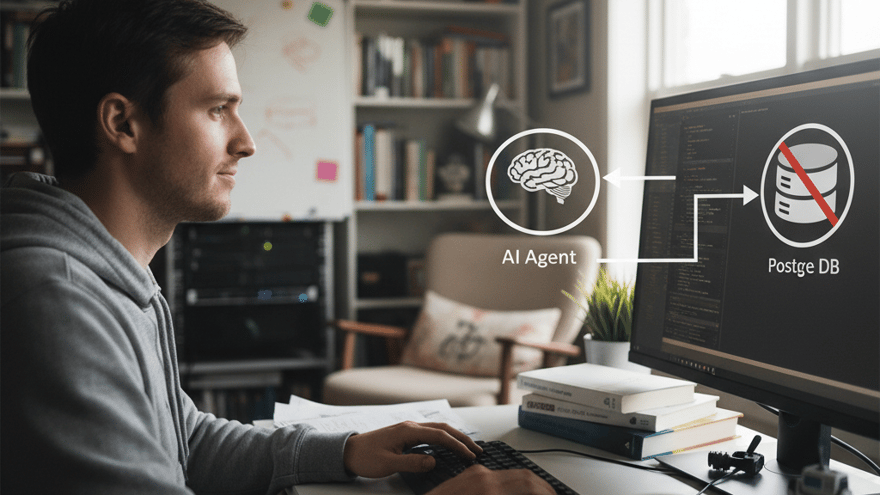
Seu agente IA coleta conversations (sem criptografia E2E)
Agente IA coleta conversations. Sem E2E encryption, conversations são legible. Vaza dados. LGPD fine, reputation damage.

Equipe OpenClaw · Time de Engenharia & Produto
A Equipe OpenClaw é formada por engenheiros, designers e especialistas em IA dedicados a construir a melhor plataforma de agentes conversacionais para negócios brasileiros. Combinamos expertise…
Seu agente IA coleta conversations (sem criptografia E2E)
Você tem SaaS.
Seu SaaS: agente IA no WhatsApp (atendimento ao cliente).
Seu agente coleta conversations:
- Customer message: "Meu CPF é 123.456.789-00"
- Agente: Recebe message (armazena em database)
- Agente: Processa conversation (extrai informação)
- Agente: Responde ao customer
Você pensa:
"Agente coleta conversations, but is it safe?
Conversations são armazenadas em database.
Database é na cloud (AWS, Google Cloud, Azure).
Meu data é safe (cloud provider é secure).
Meu agente é secure (agente é built by experts).
Tudo é OK."
But is it?
Recent news (May 2026):
"Open-source private security camera (end-to-end encryption).
"Camera: Records video locally (Raspberry Pi).
"Encryption: E2E (video is encrypted, only you have key).
"Privacy: No one (not even vendor) can see video.
"Lesson: Privacy requires end-to-end encryption (not trust)."
You realize:
"Oh.
Security camera requires E2E encryption (to protect privacy).
My agente also collects sensitive data (conversations).
My agente might need E2E encryption too (to protect privacy).
But does my agente have E2E encryption?
Let me check.
(Check agente architecture)
Oh no.
My agente: NO E2E encryption (conversations are in plaintext).
My agente conversations: Visible to vendor (cloud provider can see them).
My customers: Sending sensitive data (CPF, credit card, medical info).
My agente: Storing sensitive data in plaintext.
My database: Accessible to cloud provider staff.
My customers' sensitive data: Could be exposed (if database is breached, or if vendor is dishonest).
This is a PROBLEM."
O problema (agente sem privacy)
What data your agente collects (and stores)
TYPICAL AGENTE CONVERSATIONS (what it collects):
-
Customer identification
- Phone number (WhatsApp)
- Name
- Address
-
Financial information
- Credit card number ("Can you charge my card?")
- Bank account ("Transfer to my account")
- Payment history
- Invoice details
-
Personal information
- Date of birth
- Social Security number (CPF in Brazil)
- Medical information (if health SaaS)
- Family information
-
Business information
- Customer conversations (sensitive, proprietary)
- Support tickets (reveal problems, security issues)
- Negotiations (price, terms, conditions)
- Internal communications
-
Behavioral information
- What customers ask about (reveals pain points)
- When they ask (reveals usage patterns)
- How they phrase requests (reveals language, preferences)
- What they search for (reveals interests)
WHERE IS THIS DATA STORED?
-
Agente database (cloud provider)
- AWS RDS, Google Cloud SQL, Azure Database
- Data: Stored in plaintext (no E2E encryption)
- Access: Cloud provider employees can read it
- Security: Only access controls (firewalls, user permissions)
-
Agente logs (logging service)
- CloudWatch, Stackdriver, or similar
- Data: Conversations are logged (for debugging, auditing)
- Access: Log service employees can read it
- Security: Only access controls (firewalls, user permissions)
-
Agente backups (backup storage)
- S3, Google Cloud Storage, Azure Blob Storage
- Data: Backups include conversations (in plaintext)
- Access: Backup service employees can read it
- Security: Only access controls (firewalls, user permissions)
-
Agente vendor (OpenAI, Anthropic, Google, etc)
- If agente uses external LLM API
- Data: Conversations sent to vendor (for processing)
- Access: Vendor employees, AI trainers can see it
- Security: Vendor has "data privacy" policy (but they still see data)
- Risk: Vendor could use data for AI training (if not explicitly opted-out)
WHO CAN ACCESS THIS DATA?
-
Cloud provider employees
- AWS staff: Can access RDS database (if they want)
- Google staff: Can access Cloud SQL database (if they want)
- Security: Trust-based (you trust cloud provider won't access it)
- Risk: Insider threat (dishonest employee could steal data)
- Risk: Subpoena (government could compel cloud provider to access data)
-
LLM vendor employees
- OpenAI staff: See conversations sent to ChatGPT API (if enterprise plan)
- Anthropic staff: See conversations sent to Claude API (if using API)
- Google staff: See conversations sent to Gemini API
- Security: Trust-based (you trust vendor won't use data for training)
- Risk: Vendor could use data for model training (privacy policy is ambiguous)
- Risk: Vendor could sell data to third parties (ad networks, data brokers)
-
Data breach attackers
- If database is breached: All conversations exposed (plaintext)
- If logs are breached: All conversations exposed (plaintext)
- If backups are breached: All conversations exposed (plaintext)
- Risk: Ransomware (attacker encrypts data, demands ransom)
- Risk: Data theft (attacker steals conversations, sells on dark web)
-
Regulatory authorities
- LGPD (Brazil): Can compel cloud provider to access your data
- GDPR (Europe): Can compel cloud provider to access your data
- Government: Can issue subpoena for your data
- Security: Legal process (but data is still visible to authorities)
THE CORE PROBLEM:
Your agente stores sensitive conversations in plaintext.
Plaintext means: Anyone with access to database can read conversations.
Access includes:
- Cloud provider employees (internal threat)
- Attackers (if database is breached)
- Government (if subpoenaed)
- LLM vendor staff (if conversations sent to external API)
Result: Conversations are NOT private (only secured by access controls).
Privacy requires encryption (so even if someone accesses data, they can't read it).
Why plaintext is not enough (the security myth)
THE SECURITY ILLUSION:
Many companies think:
"Our agente is secure because:
- We use HTTPS (encrypted in transit)
- We use firewalls (access control)
- We use user authentication (only authorized users access)
- Cloud provider is trusted (AWS, Google are safe)
- We have compliance certifications (ISO 27001, SOC 2)"
BUT: This is NOT privacy.
This is security (access control), NOT privacy (data confidentiality).
Difference:
SECURITY (Access control):
- Goal: Only authorized users can access data
- Method: Firewalls, authentication, user permissions
- Problem: Still vulnerable to internal threat (authorized user gone rogue)
- Problem: Still vulnerable to subpoena (government forces access)
- Problem: Still vulnerable to insider threat (employee steals data)
PRIVACY (Data confidentiality):
- Goal: Only you can read your data (even if someone accesses it)
- Method: End-to-end encryption (data encrypted with your key, not vendor's key)
- Benefit: Even if database is breached, data is unreadable
- Benefit: Even if cloud provider is compelled (by government), data is unreadable
- Benefit: Even if insider threat (rogue employee), data is unreadable
EXAMPLE: Why security is not enough
Scenario: Your agente conversations are stored in AWS.
Case 1: Security only (no E2E encryption)
- Data: Stored in plaintext in AWS RDS
- Access control: Only your employees can access (firewalls, user permissions)
- Security: Good (only authorized people can access)
- Privacy: Bad (AWS employees could access, hackers could access if breach)
- Risk: Database breach → All conversations exposed (plaintext)
- Risk: Insider threat → AWS employee steals conversations
- Risk: Subpoena → Government forces AWS to give conversations (plaintext)
Case 2: Privacy (E2E encryption)
- Data: Stored in encrypted format in AWS RDS
- Encryption: Encrypted with your key (only you have key)
- Security: Good (only authorized people can access)
- Privacy: Good (even if accessed, data is encrypted)
- Risk: Database breach → Conversations are exposed but encrypted (unusable)
- Risk: Insider threat → AWS employee steals encrypted conversations (can't read)
- Risk: Subpoena → Government forces AWS to give conversations (encrypted, unreadable)
Comparison: Security without encryption: Depends on trust (AWS won't access, hackers won't breach) Privacy with encryption: Doesn't depend on trust (even if breach/insider, data is encrypted)
WHY YOUR CLOUD PROVIDER CAN'T GUARANTEE PRIVACY:
-
Cloud provider is not you
- Your data: Stored on cloud provider's servers
- Cloud provider's employees: Have potential access
- You: Can't prevent access (you don't own servers)
- Result: Privacy depends on cloud provider's trust
-
Cloud provider has financial incentives (to use your data)
- Your conversations: Valuable data (can train AI models)
- Cloud provider's AI team: Wants data to improve models
- Your data: Potential goldmine (millions of conversations)
- Result: Privacy is at risk (cloud provider could use data)
-
Cloud provider has legal obligations (to comply with subpoenas)
- Government: Can issue subpoena for your data
- Cloud provider: Must comply (legal obligation)
- Your data: Becomes accessible to government (no encryption)
- Result: Privacy is lost (government can read conversations)
-
Cloud provider has external pressures (from hackers, governments)
- Hackers: Constantly trying to breach cloud provider
- Governments: Demanding backdoors, data access
- Your data: Could be exposed (no encryption)
- Result: Privacy depends on cloud provider's security (not yours)
THE LGPD PROBLEM (Brazil):
LGPD = Lei Geral de Proteção de Dados (Brazil's privacy law).
LGPD requires:
- Collect personal data only with consent
- Store personal data securely (adequate security measures)
- Delete personal data when no longer needed
- Notify users if data is breached
- Respect user rights (access, correction, deletion)
Your agente might be violating LGPD:
-
Adequate security measures
- LGPD requires: "appropriate technical and organizational measures"
- Plaintext storage: Does NOT meet "appropriate security measures"
- E2E encryption: DOES meet "appropriate security measures"
- Risk: LGPD regulator could fine you (up to 2% of revenue, or R$ 50M)
-
Breach notification
- If conversations are breached: You must notify users (LGPD requirement)
- If encrypted: Breach is less harmful (data is unreadable)
- If plaintext: Breach is harmful (data is readable, personal info exposed)
- Risk: Customer lawsuits (for exposing their personal data)
-
Data minimization
- LGPD requires: Collect only necessary data
- But: Agente collects conversations (lots of unnecessary data)
- Risk: Storing more data = more risk (more chance of breach)
- Solution: Store only necessary data, delete rest
REAL COST OF DATA BREACH (with plaintext conversations):
Scenario: Your agente database is breached (1000 customers affected).
Costs:
-
Breach notification
- Notify customers (legal requirement): R$ 10k (legal/notification cost)
-
LGPD fine
- Regulator fine (2% of revenue, or up to R$ 50M): R$ 100k - R$ 1M (depending on revenue)
-
Customer lawsuits
- 50 customers sue for damages: R$ 500k (estimated legal cost + payouts)
- Each customer claims: R$ 5-10k in damages (for emotional distress, identity theft risk)
-
Lost customers
- 20% customer churn (loss of trust): R$ 500k - R$ 1M (lifetime value of lost customers)
-
Reputation damage
- Negative press: "SaaS company leaks customer conversations"
- Future customer acquisition: 50% harder (negative reputation)
- Lost revenue: R$ 1M+ (reduced growth due to reputation)
Total cost: R$ 2-3M (legal fees, fines, lost revenue, reputation damage)
VS. E2E encryption cost:
- Build E2E encryption: R$ 50-100k (one-time engineering cost)
- Maintain E2E encryption: R$ 10k/year (ongoing support)
- Cost over 5 years: R$ 100k
Savings: R$ 2M (avoid breach costs) - R$ 100k (encryption cost) = R$ 1.9M net savings
Conclusion: E2E encryption pays for itself (1,900% ROI if breach happens).
A solução (E2E encryption pra agente)
Strategy 1: Implement E2E encryption (conversations encrypted at rest)
APPROACH 1: Client-side encryption (conversations encrypted by agente, before sending to cloud)
How it works:
- Customer message arrives (WhatsApp → agente)
- Agente receives message (plaintext)
- Agente encrypts message (with encryption key)
- Agente sends encrypted message to database (encrypted blob)
- Encryption key: Stored separately (not in database)
- Database stores: Encrypted blob only (plaintext is gone)
- When agente needs message: Agente decrypts (with encryption key)
- Privacy: Even if database is breached, messages are encrypted
Benefits:
- Conversations encrypted at rest (in database)
- Only agente can decrypt (has encryption key)
- Cloud provider can't read conversations (even if they want to)
- Meets LGPD "appropriate security measures" requirement
- Survives database breach (encrypted data is useless)
Implementation:
- Use encryption library: OpenSSL, NaCl, or libsodium
- Generate encryption key: Unique key per customer (or per agente instance)
- Store key: Separate from database (in key management service)
- Encrypt on write: When conversation is saved to database, encrypt it
- Decrypt on read: When conversation is retrieved from database, decrypt it
Cost: R$ 30-50k (one-time engineering) Maintenance: R$ 5k/year (ongoing support)
APPROACH 2: End-to-end encryption (like Signal, WhatsApp)
How it works:
- Customer message arrives (WhatsApp)
- Message is encrypted by WhatsApp (E2E)
- Encrypted message comes to agente (still encrypted)
- Agente decrypts message (receives plaintext, temporarily)
- Agente processes message (LLM inference, database lookup)
- Agente generates response (plaintext)
- Agente encrypts response (before sending back to WhatsApp)
- Response goes to WhatsApp (encrypted)
- WhatsApp decrypts response (customer sees plaintext)
- Conversation: Stored in agente database (encrypted, never plaintext)
Benefits:
- True end-to-end encryption (never plaintext in database)
- Only you and customer can read conversations
- Not even agente vendor can see conversations (if using external LLM API)
- Maximum privacy (strongest option)
Implementation:
- Use Signal protocol (open standard for E2E encryption)
- Implement key exchange (customer ↔ agente)
- Implement message encryption/decryption
- Store encrypted conversations (never plaintext)
Cost: R$ 80-150k (more complex, requires protocol implementation) Maintenance: R$ 10k/year (ongoing support, security updates)
RECOMMENDATION:
Start with Approach 1 (client-side encryption):
- Easier to implement (R$ 30-50k vs R$ 80-150k)
- Sufficient for LGPD compliance
- Survives database breach
- Can upgrade to Approach 2 later (if needed)
Strategy 2: Use encryption-by-default platforms
IF YOU CAN'T BUILD ENCRYPTION YOURSELF:
Option 1: Use managed E2E encryption service
- Service: Tresorit, Sync.com, Keybase (offer E2E encryption APIs)
- How it works: You integrate service into agente
- Service encrypts conversations automatically
- You don't manage encryption keys (service does)
- Cost: R$ 500-2000/month (per service)
- Benefit: Offload encryption complexity
Option 2: Use open-source E2E encryption library
- Library: NaCl, libsodium, OpenSSL
- How it works: You implement encryption in your agente code
- You manage encryption keys (your responsibility)
- Cost: R$ 0 (open-source)
- Benefit: Full control, no vendor lock-in
Option 3: Use agente platform with built-in encryption
- Platform: Secluso (open-source, E2E encryption), or similar
- How it works: Platform handles encryption automatically
- You don't implement encryption (platform does it)
- Cost: R$ 0 (open-source) or R$ 100-500/month (commercial)
- Benefit: Encryption out of the box
RECOMMENDATION:
Start with Option 2 (open-source library):
- Free (no additional cost)
- Full control (manage your own keys)
- Easy to implement (libraries are well-documented)
- Meets LGPD compliance
Example implementation (using libsodium):
python from nacl import utils, secret, pwhash import json
Generate encryption key (once, store securely)
key = utils.random(secret.SecretBox.KEY_SIZE)
Encrypt conversation
def encrypt_conversation(message, key): box = secret.SecretBox(key) encrypted = box.encrypt(message.encode()) return encrypted.hex()
Decrypt conversation
def decrypt_conversation(encrypted_message, key): box = secret.SecretBox(key) decrypted = box.decrypt(bytes.fromhex(encrypted_message)) return decrypted.decode()
Usage
message = "Customer's sensitive data: CPF 123.456.789-00" encrypted = encrypt_conversation(message, key)
Store encrypted in database: encrypted blob (no plaintext)
decrypted = decrypt_conversation(encrypted, key)
Use decrypted in agente: plaintext only in memory (temporarily)
Cost: R$ 0 (open-source) Implementation: 1-2 weeks (moderate complexity) Result: LGPD-compliant, breach-resistant agente
Conclusão: Agente sem E2E encryption = LGPD violation risk
**O que você precisa saber:
-
Your agente collects sensitive conversations (customers' personal data)
- CPF, credit card, medical info, business secrets
- Stored in database (cloud provider's servers)
- Without E2E encryption, conversations are plaintext
- Plaintext means anyone with database access can read them
-
Plaintext conversations violate LGPD (Brazil's privacy law)
- LGPD requires "appropriate security measures"
- Plaintext = NOT appropriate security
- E2E encryption = Appropriate security
- Risk: LGPD fine (R$ 100k - R$ 1M+)
-
Why plaintext is a legal and business problem
- Database breach: All conversations exposed (plaintext)
- Insider threat: Cloud provider employee steals data
- Subpoena: Government can access data (plaintext)
- Cost of breach: R$ 2-3M (fines + lawsuits + reputation)
- vs. E2E encryption cost: R$ 100k (one-time)
-
How to implement E2E encryption (two approaches)
- Approach 1: Client-side encryption (encrypt conversations before storing)
- Approach 2: End-to-end encryption (like Signal, WhatsApp)
- Recommendation: Start with Approach 1 (easier, cheaper)
- Cost: R$ 30-50k (one-time engineering)
- Benefit: LGPD compliant, breach-resistant
-
The numbers
- No encryption risk: R$ 2-3M (if breach happens)
- E2E encryption cost: R$ 100k (one-time + maintenance)
- ROI: 20x (avoid breach costs)
- Compliance: LGPD-compliant (required)
- Customer trust: Higher (conversations are private)
Na OpenClaw, ajudamos agentes IA a:
- AUDIT agente architecture (é E2E encrypted?)
- IMPLEMENT E2E encryption (client-side ou end-to-end)
- ENSURE LGPD compliance (appropriate security measures)
- MANAGE encryption keys (secure key storage)
- TEST encryption (verify conversations are encrypted)
- DOCUMENT privacy (for customer trust, regulatory compliance)
Resultado: Seu agente IA é PRIVATE (E2E encrypted conversations) + COMPLIANT (LGPD-ready) + RESILIENT (survives data breach) + TRUSTWORTHY (customers can share sensitive data safely) + PROTECTED (avoids fines, lawsuits, reputation damage).
Seu agente IA coleta conversations em plaintext (LGPD violation risk)?
Ou seu agente IA é E2E encrypted (private, compliant, trustworthy)?
Publicado em 30 de maio de 2026