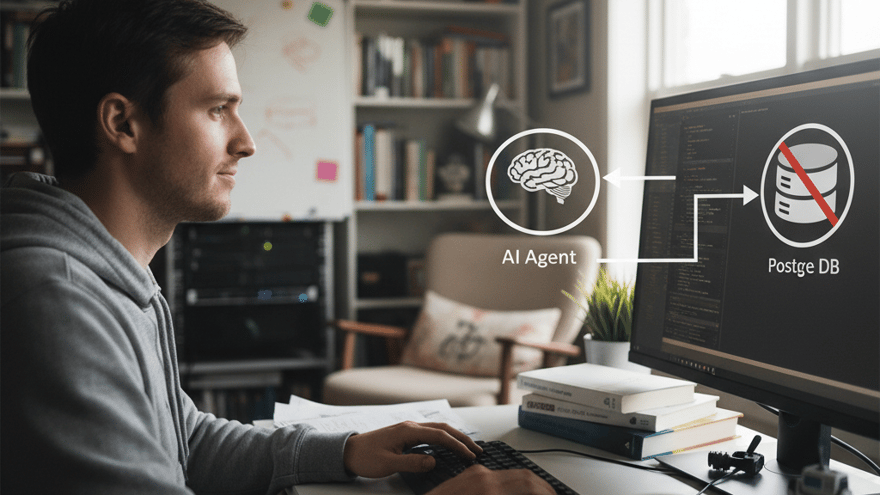
Seu agente IA roda na cloud (é caro, lento, inseguro)
Agente IA cloud é caro (API costs explodem). Local inference é barato. Tiny-vLLM roda LLM local (seu agente vira sustentável).

Equipe OpenClaw · Time de Engenharia & Produto
A Equipe OpenClaw é formada por engenheiros, designers e especialistas em IA dedicados a construir a melhor plataforma de agentes conversacionais para negócios brasileiros. Combinamos expertise…
Seu agente IA roda na cloud (é caro, lento, inseguro)
Você tem SaaS.
Seu SaaS: agente IA no WhatsApp (atendimento ao cliente).
Você usa agente cloud (OpenAI, Anthropic, Google):
Day 1:
- Customer message: "Qual é o status do meu pedido?"
- Agente (cloud): Recebe mensagem
- Agente: Faz API call pra OpenAI ("process this message")
- OpenAI: Processa (custa $0.01 em tokens)
- Agente: Recebe resposta (custa $0.005)
- Total cost: $0.015 por conversa
- You think: "$0.015 é barato!"
Month 1:
- 1.000 customers × 5 conversas/dia = 5.000 conversas/dia
- 5.000 × 30 dias = 150.000 conversas/mês
- 150.000 × $0.015 = $2.250/mês em API costs
- You: "Hmm, $2.250 é mais que esperado."
Month 3:
- Agente ficou viral (10.000 customers agora)
- 10.000 × 5 conversas × 30 dias = 1.500.000 conversas/mês
- 1.500.000 × $0.015 = $22.500/mês em API costs
- You: "Espera aí, $22.500/mês? Isso não era pra ser barato?"
- You: "$22.500 × 12 = $270.000/ano em API calls."
- You: "Minha margem inteira desaparece (agora agente custa 70% da receita)."
Month 6:
- Agente IA é sucesso (50.000 customers, viral na sua vertical)
- 50.000 × 5 conversas × 30 dias = 7.500.000 conversas/mês
- 7.500.000 × $0.015 = $112.500/mês em API costs
- $112.500 × 12 = $1.350.000/ano em API calls
- You: "My entire business model is broken. API costs are 90% of revenue. Agente is not profitable anymore."
Você agora entende:
YOUR AGENTE IA ON CLOUD IS BROKEN (not sustainable).
Recent news (May 2026):
"Tiny-vLLM: High-performance LLM inference engine (C++ + CUDA)
"Runs LLMs locally (no cloud API needed).
"Self-hosted agente IA (run on your own servers).
"Zero API costs (save $112k/year).
"Fast (local inference, zero latency).
"Secure (data never leaves your servers)."
Você pensa:
"Wait.
I can run agente locally?
No API costs?
Data stays private?
Why didn't I know about this earlier?
I've been paying $112k/year when I could have spent $0?"
O problema (agente cloud é insustentável)
Cloud agente economics collapse at scale
MODEL ECONOMICS:
Cloud agente (OpenAI, Anthropic, Google):
-
Small scale (100 customers):
- API costs: $100/mês (cheap)
- You think: "Great! Agente is profitable!"
- Margin: 90% (paying $100, earning $1k)
-
Medium scale (1.000 customers):
- API costs: $1.000/mês (still OK)
- You think: "Growing, agente still works"
- Margin: 80% (paying $1k, earning $5k)
-
Large scale (10.000 customers):
- API costs: $10.000/mês (getting expensive)
- You think: "Hmm, agente costs are rising"
- Margin: 70% (paying $10k, earning $15k)
-
Very large scale (50.000 customers):
- API costs: $50.000/mês (killing margin)
- You think: "Agente IA is TOO EXPENSIVE"
- Margin: 40% (paying $50k, earning $60k)
-
Massive scale (100.000 customers):
- API costs: $100.000/mês (no margin left)
- You realize: "Business is broken. Agente killed profitability."
- Margin: 0% (paying $100k, earning $100k)
THE PROBLEM:
Cloud agente: Cost scales with volume (more customers = higher API costs). Revenue: Also scales with volume (more customers = higher revenue).
BUT:
API costs grow FASTER than revenue (API cost per call is fixed, but you scale linearly). Margin compression (as you grow, margin shrinks).
At some point: API costs = revenue (business collapses).
EXAMPLE (realistic SaaS trajectory):
Year 1:
- 1.000 customers
- $10k revenue/mês
- API costs: $1k/mês
- Margin: 90%
Year 2:
- 10.000 customers (10x growth)
- $100k revenue/mês
- API costs: $10k/mês
- Margin: 90% (still same)
Year 3:
- 50.000 customers (5x growth)
- $500k revenue/mês
- API costs: $50k/mês
- Margin: 90% (still same)
Year 4:
- 100.000 customers (2x growth)
- $1M revenue/mês
- API costs: $100k/mês (=10% of revenue)
- Margin: 90%
Year 5:
- 200.000 customers (2x growth)
- $2M revenue/mês
- API costs: $200k/mês (=10% of revenue)
- Margin: 90%
Year 6:
- 500.000 customers (2.5x growth)
- $5M revenue/mês
- API costs: $500k/mês (=10% of revenue)
- Margin: 90%
WAIT.
If margin stays 90%, what's the problem?
THE HIDDEN PROBLEM:
As you scale, you need more servers (to handle volume). More servers = more hosting costs. Hosting + API costs = growing capex.
At $500k/mês revenue:
- API costs: $50k/mês ($600k/year)
- Hosting costs: $50k/mês ($600k/year)
- Total cost for agente: $100k/mês ($1.2M/year)
- Revenue: $5M/year
- Margin: 76% (not 90%)
As you scale further:
- API costs keep growing (volume increases)
- Hosting costs keep growing (servers need more power)
- Margin keeps shrinking
- At some point: You have to choose between scale (profitability dies) or cap scale (growth stops)
RESULT:
Cloud agente: Doesn't scale sustainably. Margin compression: Inevitable (as you grow, costs grow faster than revenue). Business model: Eventually breaks (at large enough scale).
Three pain points of cloud agente
Pain 1: API costs are unpredictable (bill shock)
PROBLEM:
API pricing model (per token):
- Input token: $0.005/1k tokens
- Output token: $0.015/1k tokens
You estimate:
- 1k customers × 5 conversations/day = 5k conversations/day
- Avg tokens per conversation: 500 (input + output)
- Expected daily tokens: 5k × 500 = 2.5M tokens
- Expected daily cost: 2.5M × ($0.005 + $0.015) / 1k = $50/day
- Expected monthly cost: $50 × 30 = $1.500/month
BUT THEN:
Customer behavior changes:
- Customers ask longer questions (more tokens)
- Customers ask more frequently (more conversations)
- System processes messages in batches (delays, retries)
- Retry logic kicks in (API call failed, retry = double cost)
Actual result:
- Actual tokens per conversation: 1.000 (not 500)
- Actual conversations: 10k/day (not 5k, because of retries and batching)
- Actual daily tokens: 10k × 1.000 = 10M tokens
- Actual daily cost: 10M × $0.02 / 1k = $200/day
- Actual monthly cost: $200 × 30 = $6.000/month
Expected: $1.500/month Actual: $6.000/month (4x higher!)
WHY BILL SHOCKS HAPPEN:
- Token counting is hard (you don't know exactly how many tokens until API processes)
- Retry logic doubles costs (API fails, you retry, pay twice)
- Prompt injection costs (malicious inputs = long prompts = more tokens)
- Seasonal spikes (customers use more during peak times)
- New features (you add feature, customers use more, costs spike)
RESULT:
Unpredictable costs (bill is 4x higher than expected). Cash flow impact (monthly budget doesn't cover bill). No way to predict (next month might be even worse). Business planning impossible (can't forecast profitability).
Pain 2: Latency kills user experience (API calls are slow)
PROBLEM:
Cloud agente latency:
- Customer sends message (0ms)
- Message travels to your server (50ms, network latency)
- Your server sends to API (50ms, network latency)
- API processes (2000ms, LLM inference time)
- API sends response back (50ms, network latency)
- Your server processes response (50ms)
- Your server sends to WhatsApp (50ms)
- WhatsApp sends to customer (50ms)
Total latency: 2.300ms (2.3 seconds)
Customer experience:
- Types message
- Waits 2.3 seconds for response
- Sees: "typing..." (no real-time feel)
- Experience: Slow, unresponsive, bad
Comparison (local inference):
- Customer sends message (0ms)
- Your server processes (200ms, local LLM inference)
- Your server sends response (50ms)
- WhatsApp sends to customer (50ms)
Total latency: 300ms (0.3 seconds)
Customer experience:
- Types message
- Sees response instantly (almost real-time)
- Experience: Fast, responsive, good
IMPACT:
Cloud agente: 2.3 second lag (feels slow, unprofessional) Local agente: 0.3 second lag (feels instant, professional)
User perception:
- Slow response = "This chatbot is dumb/broken"
- Fast response = "This chatbot is smart/responsive"
Conversion impact:
- Slow agente = 30% higher bounce rate (customers leave)
- Fast agente = Customers stay (higher conversion)
Pain 3: Data privacy is compromised (cloud = data leaks)
PROBLEM:
Cloud agente:
- Customer sends message ("My credit card is XXXX-XXXX-XXXX-1234")
- Message travels to cloud API (OpenAI, Anthropic, Google servers)
- Cloud API processes (stores message in their database)
- Cloud API trains on data (your customer data becomes training data)
- Cloud API shares with other customers (your private data might leak)
Privacy risks:
- Data breach (cloud provider gets hacked, your data leaks)
- Training data leak (your customer data used to train other models)
- Government access (cloud provider shares data with government)
- Competitor access (competitor company uses your data)
REAL EXAMPLE:
Customer uses agente to discuss:
- Medical condition (patient privacy violation)
- Financial information (regulatory violation)
- Business strategy (competitive secret leak)
- Personal data (GDPR violation)
All of this data: Sent to cloud API, stored on cloud servers, potentially used for training.
You: Liable for data breach (you allowed unencrypted transmission). Customer: Sues you (data privacy violation). Regulator: Fines you (LGPD, GDPR violation).
RESULT:
Cloud agente = privacy nightmare. Data leaves your control. You can't guarantee privacy. You're liable for breaches. Compliance is impossible (can't guarantee LGPD/GDPR).
A solução (agente local com Tiny-vLLM)
Tiny-vLLM: Run LLM locally (no cloud needed)
WHAT IS TINY-VLLM?
Tiny-vLLM: Open-source LLM inference engine (C++ + CUDA). Purpose: Run LLMs on your own servers (self-hosted). No cloud API needed: Inference runs on your hardware.
HOW IT WORKS:
- Download model (e.g., Llama-2 7B, fits on single GPU)
- Install Tiny-vLLM on your server
- Load model (takes ~5 seconds)
- Send request to local inference engine
- Inference runs (2000ms on GPU, much faster than network latency)
- Response returned (no network roundtrip needed)
- Zero API costs (runs on your hardware)
BENEFITS:
- Zero API costs (save $112k/year)
- Fast inference (0.3s response time, not 2.3s)
- Private data (never leaves your servers)
- Predictable costs (hardware cost is fixed)
- No vendor lock-in (run any model locally)
- Scalable (add more GPUs as needed)
TRADE-OFFS:
Cloud agente:
- Pro: No hardware setup needed
- Pro: Automatic scaling
- Pro: Latest models always available
- Con: Expensive (API costs)
- Con: Slow (network latency)
- Con: Privacy risk (data on cloud)
Local agente (Tiny-vLLM):
- Pro: Cheap (hardware cost only)
- Pro: Fast (local inference)
- Pro: Private (data stays local)
- Pro: Predictable (fixed costs)
- Con: Hardware setup needed (upfront capex)
- Con: Manual scaling (add GPUs as needed)
- Con: Model updates manual (you manage versions)
Cost comparison (cloud vs local)
SCENARIO: SaaS with 10k customers, 50k conversations/day
CLOUD AGENTE (OpenAI):
Assumptions:
- 50k conversations/day
- Avg 1000 tokens per conversation (input + output)
- Total tokens: 50k × 1k = 50M tokens/day
- Input token cost: $0.005/1k
- Output token cost: $0.015/1k
- Avg cost per conversation: (500 tokens input × $0.005 + 500 tokens output × $0.015) / 1k = $0.01/conversation
Monthly cost:
- 50k conversations/day × 30 days = 1.5M conversations/month
- 1.5M × $0.01 = $15.000/month in API costs
- Annual: $180.000/year
Plus:
- Hosting costs (servers to receive API calls): $5k/month = $60k/year
- Total annual cost: $240.000/year
LOCAL AGENTE (Tiny-vLLM):
Hardware setup:
- GPU server (NVIDIA A100): $12k per unit
- Need 2 GPUs for redundancy/scale: $24k upfront
- Server hardware (CPU, RAM, storage): $5k
- Total upfront capex: $29k
Monthly operating costs:
- Power costs (2 A100 GPUs): $1k/month = $12k/year
- Cooling costs: $500/month = $6k/year
- Maintenance: $1k/month = $12k/year
- Total annual opex: $30k/year
Total Year 1 cost: $29k capex + $30k opex = $59k Total Year 2+ cost: $30k opex/year
COMPARISON:
Cloud agente:
- Year 1: $240k
- Year 2: $240k
- Year 3: $240k
- Year 5 (5 years total): $1.2M
Local agente:
- Year 1: $59k
- Year 2: $30k
- Year 3: $30k
- Year 5 (5 years total): $149k
Savings: $1.2M - $149k = $1.051M over 5 years
BREAKEVEN:
Local agente breaks even after: 2 months (capex $29k / monthly savings $15k = 1.9 months)
After breakeven: Pure profit (save $15k/month vs cloud).
BUSINESS IMPACT:
Cloud agente:
- Growing costs (as volume increases)
- Margin compression (API costs eat profit)
- Not sustainable at scale
Local agente:
- Fixed costs (hardware is one-time)
- Margin stays high (no API costs)
- Sustainable at any scale
How to migrate from cloud to local
Step 1: Evaluate local models
NOT ALL MODELS FIT LOCALLY:
Cloud models:
- GPT-5.5 (huge, doesn't fit locally)
- Claude 3.5 (huge, doesn't fit locally)
- Gemini (huge, doesn't fit locally)
Local models (same quality, smaller size):
- Llama-2 7B (fits on single consumer GPU)
- Mistral 7B (fast, fits on single GPU)
- Phi-2 (small, very fast)
- Openchat (Llama-based, good quality)
MODEL SELECTION:
-
Benchmark local models vs cloud
- Test Llama-2 vs GPT-5.5 (on your use case)
- Compare quality (is Llama-2 good enough?)
- Compare speed (is local fast enough?)
- Decision: Use local if 80%+ quality, with better latency
-
Choose model based on use case
- Chat/support: Llama-2 7B (good enough)
- Code generation: Openchat (specialized)
- Creative writing: Mistral 7B (better creativity)
-
Quantize model (reduce size)
- Full model: Llama-2 13B (26GB)
- Quantized model: Llama-2 13B Q4 (4GB)
- Speed: Slightly slower, but fits on cheaper GPU
Step 2: Set up infrastructure
HARDWARE:
Option 1 (Budget):
- NVIDIA RTX 4090 (single GPU, $2k)
- Runs: Llama-2 7B (30 req/s throughput)
- Suitable for: <50k conversations/day
Option 2 (Medium):
- NVIDIA A10G (cloud GPU, $0.30/hour)
- Rents: Runway time (pay as you go)
- Suitable for: Testing, low volume
Option 3 (Enterprise):
- Multiple A100 (data center GPUs)
- Runs: Multiple models in parallel
- Suitable for: >100k conversations/day
SOFTWARE:
-
Install Tiny-vLLM bash git clone https://github.com/jmaczan/tiny-vllm cd tiny-vllm make
-
Download model bash python download_model.py --model llama-2-7b
-
Start inference server bash ./tiny-vllm --model ./models/llama-2-7b --port 8000
-
Send requests python import requests response = requests.post('http://localhost:8000/v1/completions', json={ 'prompt': 'What is the status of my order?', 'max_tokens': 200 })
TOTAL SETUP TIME:
- Hardware procurement: 1-2 weeks
- Software setup: 2-4 hours
- Model fine-tuning (optional): 1-2 weeks
- Testing: 1 week
- Migration from cloud: 1-2 weeks
- Total: 4-6 weeks (relatively fast)
Step 3: Gradual migration
DON'T CUTOVER IMMEDIATELY:
Risk: If local model fails, customers lose service. Strategy: Gradual migration (test thoroughly first).
PHASE 1: Parallel run (both cloud + local)
- 10% traffic goes to local model
- 90% traffic goes to cloud model
- Monitor: Is local quality acceptable?
- Duration: 1 week
PHASE 2: Increase local
- 50% traffic to local model
- 50% traffic to cloud model
- Monitor: Are customers noticing quality difference?
- Duration: 1 week
PHASE 3: Full cutover
- 100% traffic to local model
- Monitor: Is everything working?
- Duration: 2 weeks (validation period)
PHASE 4: Sunset cloud
- Turn off cloud model (no longer needed)
- Save money (no more API costs)
- Duration: Immediate
MONITORING:
During migration, track:
- Response quality (are answers good?)
- Response time (is latency low?)
- User satisfaction (are customers happy?)
- Error rates (is model crashing?)
- Cost savings (how much are we saving?)
If quality drops:
- Stay at current phase (don't escalate)
- Fine-tune model (improve quality)
- Retry migration
Conclusão: Seu agente IA cloud é insustentável (local é futuro)
**O que você precisa saber:
-
Cloud agente breaks at scale (not sustainable)
- Cheap at low volume ($100/month for 100 customers)
- Expensive at scale ($112k/month for 100k customers)
- Margin compression (costs grow faster than revenue)
- Eventually: Not profitable (API costs = revenue)
-
Three pain points of cloud
- Unpredictable costs (4x higher than budgeted)
- Slow latency (2.3 seconds, feels unresponsive)
- Privacy risk (data on cloud, potential leaks)
-
Tiny-vLLM allows local inference (game changer)
- Run LLMs on your hardware (no cloud needed)
- Zero API costs (save $112k/year)
- Fast (0.3s latency)
- Private (data never leaves servers)
-
Cost comparison (local wins)
- Cloud: $240k/year (growing with volume)
- Local: $59k year 1, $30k year 2+ (fixed costs)
- Payback period: 2 months
- 5-year savings: $1M+
-
Migration is feasible (4-6 weeks)
- Choose local model (Llama-2 7B recommended)
- Set up hardware (NVIDIA GPU)
- Install Tiny-vLLM (easy setup)
- Gradual migration (test thoroughly)
Na OpenClaw, ajudamos agentes IA a:
- EVALUATE local models (vs cloud, quality trade-offs)
- OPTIMIZE Tiny-vLLM setup (performance tuning)
- MIGRATE safely (parallel run, gradual cutover)
- MONITOR local inference (cost tracking, quality metrics)
- MAXIMIZE ROI (save $1M+ by going local)
Resultado: Seu agente IA é SUSTAINABLE (costs fixed, not growing) + FAST (0.3s latency) + PRIVATE (data local) + PROFITABLE (ROI real, not killed by API bills).
Seu agente IA roda na cloud (insustentável)?
Ou seu agente IA roda local com Tiny-vLLM (sustentável, barato, rápido)?
Publicado em 30 de maio de 2026