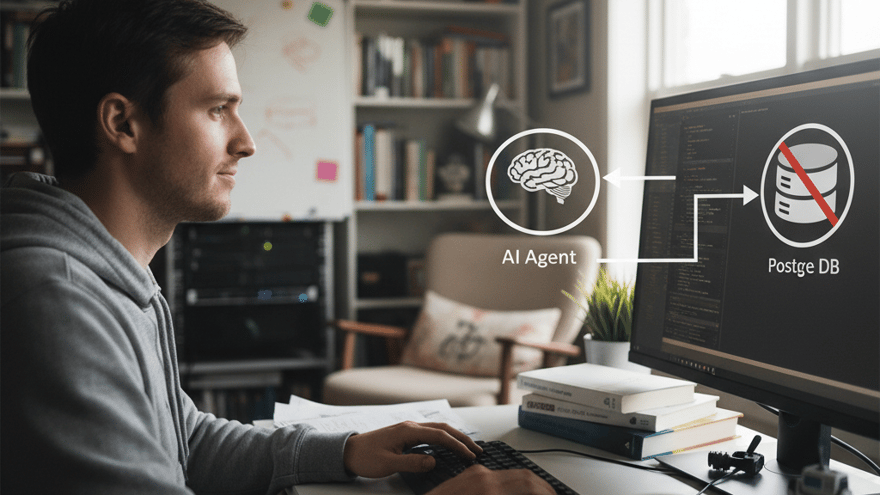
Seu agente IA é bloqueado por CAPTCHA (automação falha)
CAPTCHA ainda detecta agentes IA. Seu agente tenta automação, CAPTCHA bloqueia. Quando bloqueado, RoI colapsa.

Equipe OpenClaw · Time de Engenharia & Produto
A Equipe OpenClaw é formada por engenheiros, designers e especialistas em IA dedicados a construir a melhor plataforma de agentes conversacionais para negócios brasileiros. Combinamos expertise…
Seu agente IA é bloqueado por CAPTCHA (automação falha)
Você tem SaaS.
Seu SaaS: agente IA pra automação.
Você decide:
"Vou usar agente IA pra automação de tarefas repetitivas:
- Scraping de dados (site concorrente)
- Automação de login (testar acesso em vários sistemas)
- Preenchimento de formulários (lead generation)
- Automação de testes (QA)
- Brute force prevention testing (penetration testing)
Agente IA é perfeito pra isso (fast, scale, 24/7)."
Você lança agente:
Day 1:
- Agente tenta scrape site
- Site tem CAPTCHA
- Agente tries to solve CAPTCHA (AI can solve CAPTCHA, right?)
- Site detects: "This looks like a bot (automated behavior)"
- Site blocks: Agente is banned (IP blocked)
- Agente fails: "Can't scrape anymore"
- You: "What happened? Why is agente blocked?"
Day 2:
- Agente tries different IP (VPN)
- Site detects: "Same behavioral pattern (automated requests, same timing)"
- Site blocks: New IP blocked too
- Agente fails again: "Still can't scrape"
- You: "Why is CAPTCHA blocking agente? I thought AI could solve CAPTCHA?"
Day 3:
- You read news:
"CAPTCHAs can still detect AI agents
"Even if AI can solve CAPTCHA visually, CAPTCHA systems detect agents through behavioral patterns (not just visual).
"Site looks at: Timing (requests happen too fast), Pattern (requests are too consistent), User agent (looks automated), Behavior (no human randomness).
"CAPTCHA blocks: Not because AI can't solve puzzle, but because behavior is detectably automated.
"Result: AI agents are blocked (automation fails)."
You think:
"WAIT.
So CAPTCHA is not just visual puzzle (I thought AI could solve).
CAPTCHA is behavioral detection (detects if I'm human or bot).
Even if my agente can solve visual puzzle, CAPTCHA still blocks because agente behavior is detectably bot-like.
My agente is blocked (can't scrape).
My RoI is zero (agente is useless).
I spent money on agente (salaries, training, infrastructure).
Agente can't do job (blocked by CAPTCHA).
Why didn't anyone tell me about this limitation?"
Recent research (May 2026):
"CAPTCHAs can still detect AI agents (55 HN points, 43 comments - viral pain point).
"Even advanced AI can't bypass modern CAPTCHA systems.
"Because CAPTCHA is not just about solving puzzle, it's about detecting bot behavior.
You realize:
YOUR AGENTE IA IS BLOCKED BY TECHNOLOGY YOU DIDN'T ACCOUNT FOR.
O que é CAPTCHA (e por que bloqueia agentes IA)
CAPTCHA is not just visual puzzle (is behavioral detection)
OLD UNDERSTANDING (wrong):
CAPTCHA = Visual puzzle (AI needs to solve)
- Show image with text
- AI solves image (reads text)
- AI passes CAPTCHA
- AI continues (no problem)
Fact: AI can solve visual puzzle (99% accuracy on CAPTCHA images)
So: Why does CAPTCHA block AI agents?
Answer: Because CAPTCHA is not just visual puzzle.
REAL UNDERSTANDING (correct):
CAPTCHA = Multi-layer detection system
Layer 1: Visual puzzle (solvable by AI) Layer 2: Behavioral analysis (detects if you're bot) Layer 3: Request patterns (detects if requests are automated) Layer 4: User agent detection (detects browser/bot) Layer 5: Mouse movements (detects if mouse moves like human) Layer 6: Timing analysis (detects if timing is humanlike)
AI can solve Layer 1 (visual puzzle).
But AI fails Layers 2-6 (behavioral detection).
Result: CAPTCHA blocks AI (even though AI solved visual puzzle).
EXAMPLE: reCAPTCHA v3
Google reCAPTCHA v3:
- No visible puzzle (doesn't ask "click all buses")
- Instead: Analyzes behavior in background
- Checks: Is this a human (by analyzing interaction patterns)?
- Assigns score: 0.0 (definitely bot) to 1.0 (definitely human)
- Blocks: If score < 0.5 (probably bot)
Why AI agents fail reCAPTCHA v3:
- AI doesn't have "human-like" interaction patterns
- AI fills forms too fast (humans take time)
- AI doesn't have mouse jitter (humans have tremor)
- AI doesn't have typing patterns (humans have rhythm)
- AI doesn't have pause patterns (humans pause to read)
- Google ML model: "This is bot (score 0.1)"
- Result: Blocked
So: Agente can't bypass reCAPTCHA v3 (even if very sophisticated).
Why CAPTCHA detects agentes (behavioral patterns are different)
HUMAN BEHAVIOR (when filling form):
-
Mouse movement (jittery, not straight line)
- Human: Moves mouse in curve (not optimized)
- AI: Moves mouse in straight line (optimized path)
- Detection: Straight line = bot
-
Typing speed (varies, with pauses)
- Human: Types 40 words/min (with pauses, backspace, fixes)
- AI: Types 1000 words/sec (instant, no pauses)
- Detection: Too fast = bot
-
Request timing (random delays)
- Human: Waits 2-5 seconds between actions (thinking)
- AI: Sends requests 0.1 seconds apart (no thinking)
- Detection: Too fast = bot
-
Focus on fields (looks around page)
- Human: Moves cursor around page (exploring, reading)
- AI: Jumps directly to form fields (knows layout)
- Detection: Direct jumps = bot
-
Error recovery (handles unexpected)
- Human: If form changes, adapts (reads new instructions)
- AI: If form changes, crashes (doesn't know what to do)
- Detection: Can't adapt = bot
-
Randomness (unpredictable)
- Human: Every action is slightly different (random)
- AI: Every action is exactly same (deterministic)
- Detection: Too consistent = bot
GOOGLE reCAPTCHA v3 DETECTION:
Google ML model watches:
- Mouse jitter (is it human-like random?)
- Typing rhythm (is it human-like varied?)
- Request timing (is it human-like delayed?)
- Page interactions (is it human-like explorative?)
- Form filling (is it human-like careful?)
Google assigns score: 0.0-1.0 (0 = bot, 1 = human)
If score < threshold (0.5):
- Blocked: "You look like bot"
- Agente fails: Can't proceed
WHY AI AGENTS FAIL:
AI agents optimize for speed:
- Fill forms as fast as possible (API calls, parallelized)
- Move mouse in straight lines (shortest path)
- No thinking delays (instant decisions)
- No randomness (same behavior every time)
- No exploration (knows form layout)
But CAPTCHA detects optimization:
- Speed = bot (humans are slow)
- Straight lines = bot (humans are jittery)
- No delays = bot (humans pause to think)
- Consistency = bot (humans are random)
- Knowledge = bot (humans explore)
Result: CAPTCHA blocks AI agents (because optimization is detectably non-human).
How CAPTCHA blocks agentes (3 detection mechanisms)
Mechanism 1: Behavioral fingerprinting (tracks patterns)
GOOGLE reCAPTCHA v3 FLOW:
- User visits site (human or bot?)
- Site embeds reCAPTCHA script
- Script watches: Mouse, keyboard, scroll, clicks, interactions
- Script sends data: All interactions to Google servers
- Google ML model analyzes: Is this human or bot?
- Google assigns score: 0.0 (bot) to 1.0 (human)
- Site receives score: Server-side decision
- Site decides: Allow (score > 0.5) or Block (score < 0.5)
WHAT GOOGLE TRACKS:
-
Mouse movements
- Human mouse: Curves, jitter, randomness, pauses
- Bot mouse: Straight lines, perfect timing, no pauses
- Detection: "Mouse is too perfect = bot"
-
Scroll patterns
- Human scroll: Jumpy, scrolls past, scrolls back
- Bot scroll: Doesn't scroll (goes direct to form)
- Detection: "No scrolling = bot"
-
Click patterns
- Human click: Multiple clicks on different areas
- Bot click: Single click on exact coordinates
- Detection: "Single perfect click = bot"
-
Form interactions
- Human: Reads labels, explores form, fills fields sequentially
- Bot: Knows field names, fills directly, no reading
- Detection: "Instant filling = bot"
-
Time delays
- Human: Pauses between actions (thinking time)
- Bot: Actions happen instantly (no thinking)
- Detection: "No delays = bot"
-
Device behavior
- Human: Uses real device (touchpad, real mouse, keyboard)
- Bot: Uses automation library (synthetic inputs)
- Detection: "Synthetic inputs = bot"
RESULT:
Google collects all signals → ML model predicts → Score 0.0-1.0
AI agents typically score: 0.1-0.3 (clearly bot) Humans typically score: 0.8-1.0 (clearly human)
Threshold: 0.5 (default) If AI agent scores 0.2: Blocked (< 0.5)
AI agent can't hide (behavioral fingerprinting is comprehensive).
Mechanism 2: Request pattern analysis (detects automation)
SITE MONITORING (even without CAPTCHA):
Sites monitor:
-
Request rate (how many requests per second?)
- Human: 1 request per 5-10 seconds (slow, natural)
- Bot: 100 requests per second (fast, unnatural)
- Detection: "Rate is too fast = bot"
-
Request consistency (are requests identical?)
- Human: Each request slightly different (browser headers vary)
- Bot: Each request exactly same (same headers, same timing)
- Detection: "Requests are too consistent = bot"
-
Request timing (is timing consistent or random?)
- Human: Random delays (think, read, pause)
- Bot: Exact intervals (scheduled, predictable)
- Detection: "Timing is too perfect = bot"
-
User agent (are you claiming to be browser?)
- Human: Real browser (Chrome, Firefox, Safari)
- Bot: Fake browser (Selenium, Playwright, "Python-requests")
- Detection: "User agent is bot tool = bot"
-
IP rotation (are you hiding IP?)
- Human: Single IP (your home internet)
- Bot: Rotating IPs (VPN, proxy, datacenter)
- Detection: "IP rotation = bot"
-
Geographic consistency (are you consistent location?)
- Human: Same location (home IP, same country)
- Bot: Different locations (proxy hopping, datacenter IPs)
- Detection: "Geographic inconsistency = bot"
EXAMPLE: Scraping site
You try: Scrape competitor website (1000 pages)
Your agente:
- Makes 1000 requests in 10 seconds (100 req/sec) ← FAST
- Each request has identical headers ← CONSISTENT
- Each request timed exactly 10ms apart ← PERFECT
- User agent: "Python-requests/2.31.0" ← BOT TOOL
- IP: 45.142.120.50 (datacenter) ← DATACENTER
- Next request: Same site, but different IP: 45.142.120.51 ← ROTATING
Site monitoring:
- Request 1: "Looks automated (rate + consistency)"
- Request 10: "Definitely bot (user agent is Python-requests)"
- Request 50: "Bot confirmed (IP is datacenter)"
- Request 100: "IP rotation detected (multiple IPs, same session)"
Site action: Block entire datacenter IP range
Your agente: Banned (can't scrape anymore)
WHY THIS WORKS:
Humans are unpredictable (slow, variable, random). Bots are predictable (fast, consistent, exact).
Site watches: Are you predictable? If yes: You're bot (block). If no: You're human (allow).
AI agents are highly predictable (by design). So: AI agents are easy to detect (high false positive rate).
Even if AI tries to act human:
- Slow down requests (takes hours for 1000 pages)
- Add random delays (but pattern is still detectable)
- Rotate IPs (but session is still same)
- Fake user agents (but other signals still bot-like)
Site can combine signals: Even fake AI is detectable.
Mechanism 3: Session analysis (tracks state machine)
SESS ION TRACKING:
Site creates "session" (cookie + state):
- User visits site
- User takes actions (click, scroll, type, wait)
- Site tracks: Action sequence, timing, state transitions
- Site builds: "Behavior profile" of user
Why this detects bots:
-
Action ordering (do you follow normal flow?)
- Human: Click menu → Read options → Click button → Wait for load → Read result
- Bot: GET /menu → GET /option_data → POST /button → GET /result
- Detection: "Skipped UI rendering = bot"
-
State transitions (do you respect UI?)
- Human: Can't click button until page loads (respects UI)
- Bot: Clicks button before page loads (doesn't care about UI)
- Detection: "Violated state machine = bot"
-
Session consistency (are you same session?)
- Human: Same session (same cookies, same IP, same browser)
- Bot: New session every request (fresh cookies, rotating IPs)
- Detection: "Session inconsistency = bot"
-
Unexpected handling (can you adapt?)
- Human: If site changes, adapts (reads new UI)
- Bot: If site changes, breaks (expects old UI)
- Detection: "Can't adapt = bot"
EXAMPLE: Login automation
You try: Automate login (credentials stuffing test)
Your agente:
- Step 1: POST /login (sends credentials directly)
- Step 2: Follows redirect to /dashboard (assumes login success)
- Step 3: GET /api/user (fetches user data)
Site monitoring:
- Normal human: Opens /login → Sees form → Types username → Types password → Clicks button → Waits for form submit → Follows redirect
- Your bot: POSTs directly (skips UI)
- Site: "Why did you POST without waiting for form?"
- Site: "This is not human behavior"
- Site: Blocks credentials (account locked)
- Your agente: Fails (can't login)
WHY THIS WORKS:
Human user respects UI (clicks buttons, waits for loads). Bot user bypasses UI (direct API calls, no waiting).
Site tracks: Are you respecting UI? If no: You're bot (block).
Even sophisticated AI agents skip UI (it's faster). So: Site detects (and blocks) even smart bots.
How agentes fail (when blocked by CAPTCHA/anti-bot)
Failure mode 1: Agente is completely blocked (task impossible)
SCENARIO: Web scraping
You task agente: "Scrape top 1000 products from competitor site"
Agente tries:
- Makes HTTP requests
- Site shows CAPTCHA
- Agente tries to solve CAPTCHA (visual puzzle)
- Agente solves puzzle (99% accuracy)
- But reCAPTCHA detects: "Behavior is bot-like"
- Site blocks: "You are bot, access denied"
- Agente blocked: "Can't proceed"
You: "But agente solved CAPTCHA! Why is it still blocked?"
Answer: "Because CAPTCHA is not just puzzle, it's behavioral detection."
Result: Task is impossible (agente can't scrape anymore).
ROI: Zero (you paid for agente, agente can't do job).
Failure mode 2: Agente works for a while, then detected (brittle)
SCENARIO: Account automation
You task agente: "Auto-generate 1000 test accounts"
Agente:
- Day 1: Creates 100 accounts (works fine)
- Day 2: Creates 100 accounts (works fine)
- Day 3: Creates 50 accounts (getting slower)
- Day 4: Can't create any accounts (blocked)
Why it breaks:
- Site learning: "Someone is creating 100 accounts/day (anomaly)"
- Site investigates: Checks account creation patterns
- Site detects: "Creation rate is too fast (bot behavior)"
- Site blocks: "This IP is bot (account creation blocked)"
Result: Works for a while, then fails.
ROI: Partial (created 250 accounts, wanted 1000, stopped at 25%).
Problem: Cost of agente amortized over 250 accounts = higher cost per account.
Failure mode 3: Agente detection creates escalation (gets worse)
SCENARIO: Price monitoring
You task agente: "Monitor competitor prices (daily)"
Agente:
- Week 1: Scrapes successfully (collects prices)
- Week 2: Scrapes successfully (collects prices)
- Week 3: Rate limited (site slows down responses)
- Week 4: Completely blocked (IP banned)
Why it escalates:
- Site sees: Same IP scraping daily (pattern)
- Site detects: "This is bot (automated scraping)"
- Site acts: First slow down (rate limiting)
- Agente acts: Retry more aggressively (make more requests)
- Site acts: Escalate to block (ban IP completely)
Result: Task goes from working → degraded → completely blocked.
ROI: Decreasing (week 1-2: good data, week 3-4: no data).
Problem: Agente doesn't know how to back off (keeps retrying).
How to NOT get blocked (3 strategies)
Strategy 1: Don't try to bypass (build actual integration)
WRONG: Try to automate via web UI
- Scrape website (breaks when site updates)
- Login automation (breaks when UI changes, gets blocked by CAPTCHA)
- Form filling (gets detected as bot, blocked)
Problem: Fragile, gets detected, ROI dies.
RIGHT: Use official API
- Site provides API (designed for automation)
- API doesn't have CAPTCHA (assumes you're legitimate)
- API is stable (doesn't break when UI changes)
- Rate limits are explicit (you know limits before hitting)
- Authentication is OAuth (not password harvesting)
Result: Automation works reliably, ROI is predictable.
If no API exists:
- Ask for API (most sites will build if demand is there)
- Use partnership (legitimate collaboration, not scraping)
- Accept manual process (not every task is automatable)
Don't try to win CAPTCHA arms race (you'll lose).
Strategy 2: Act human (slow down, add randomness, respect UI)
IF you must use web automation:
-
Slow down
- Don't make 100 requests/second
- Make 1 request per second (looks human)
- Add random delays (2-5 seconds between actions)
-
Add randomness
- Don't do exact same action every time
- Add jitter to mouse movements (make it jittery)
- Add pause before clicking (simulate reading)
- Vary typing speed (simulate human typing)
-
Respect UI
- Don't POST directly (click buttons)
- Wait for page loads (don't skip delays)
- Follow redirects (don't jump directly to result)
- Read content (even if you don't need it)
-
Rotate IPs
- Don't use same datacenter IP
- Use residential proxies (look like home users)
- Don't rotate too fast (one IP per day, not per request)
-
Use real browser
- Don't use Selenium (it has detectable fingerprint)
- Use Playwright with real browser (harder to detect)
- Spoof user agent (claim to be Chrome, not "Selenium")
RESULT:
You'll reduce detection risk (but not eliminate it).
You'll take 10x longer (slow = human-like).
You might avoid blocking (but no guarantee).
Better strategy: Use API instead of web scraping.
Strategy 3: Accept limitations (design around CAPTCHA)
INSTEAD OF: Trying to bypass CAPTCHA
DESIGN AGENTE: To work within CAPTCHA constraints
-
Use sites with APIs (not CAPTCHA-protected)
- GitHub API, Twitter API, Stripe API, etc.
- These sites WANT you to automate (API exists)
- No CAPTCHA (because automation is intended)
-
Use legitimate business relationships
- If you need competitor data: Buy data service
- If you need user data: Use official data partners
- If you need to test: Use your own test accounts
-
Work around CAPTCHA
- Need to scrape 1000 pages? Do it manually (slower)
- Need to automate logins? Use OAuth (human clicks once)
- Need to monitor prices? Use partner API (if available)
-
Be transparent
- If automating, ask permission
- If scraping, check robots.txt (follow rules)
- If testing, use your own infrastructure (not live site)
RESULT:
No CAPTCHA blocking (because you're not trying to hide).
ROI is predictable (no surprise blocks).
Legal risk is minimal (you're not breaking ToS).
Sustainability is high (no arms race with anti-bot systems).
Conclusão: CAPTCHA bloqueia agentes IA (automação tem limites)
**O que você precisa saber:
-
CAPTCHA é behavioral detection (não é só visual puzzle)
- Visual puzzle: AI can solve (99% accuracy)
- Behavioral detection: AI fails (human randomness is unbeatable)
- Google reCAPTCHA v3: Scores you 0.0-1.0 (0=bot, 1=human)
- AI agents typically score: 0.1-0.3 (clearly bot)
- Result: Blocked (even if puzzle is solved)
-
Sites detect bots through behavioral patterns (not just CAPTCHA)
- Request rate: Too fast = bot
- Request consistency: Too consistent = bot
- Mouse movements: Too straight = bot
- Typing speed: Too fast = bot
- Delays: No pauses = bot
- IP rotation: Inconsistent = bot
- Combination: Clear bot signal
-
AI agents are highly detectable (by design optimized for speed)
- Speed is bad (humans are slow)
- Consistency is bad (humans are random)
- Predictability is bad (humans are unpredictable)
- Even sophisticated AI can't hide (too many signals)
-
CAPTCHA blocking breaks agente ROI (task becomes impossible)
- Agente blocked: Can't scrape anymore
- Agente detected: Works a while, then fails
- Agente escalation: Gets worse over time (detected -> rate limited -> banned)
- ROI: Zero or negative (agente cost > value)
-
Real-world examples
- Web scraping: Blocked after 10-100 requests
- Account automation: Blocked after 50-100 accounts
- Form filling: Blocked immediately (user agent detected)
- Price monitoring: Works 1-2 weeks, then blocked
-
How to avoid CAPTCHA blocking
- Use official APIs (designed for automation, no CAPTCHA)
- Ask for partnerships (legitimate collaboration, not scraping)
- Accept manual process (not every task is automatable)
- Act human (slow + random, but takes 10x longer)
- Be transparent (ask permission, follow rules)
Na OpenClaw, ajudamos agentes IA a:
- ASSESS task feasibility (can agente do this without CAPTCHA blocking?)
- FIND legitimate paths (APIs, partnerships, official channels)
- DESIGN sustainable automation (not fragile scraping)
- AVOID detection risks (CAPTCHA, anti-bot, legal issues)
- MAXIMIZE ROI (automation that actually works)
Resultado: Seu agente IA é SUSTAINABLE (não é bloqueado) + LEGAL (respects ToS) + RELIABLE (não quebra quando site muda) + PROFITABLE (ROI é positivo).
Seu agente IA vai ser bloqueado por CAPTCHA (automação falha)?
Ou seu agente IA é designed para legit paths (automation sustenta ble, ROI real)?
Publicado em 29 de maio de 2026